Ramadan 2026 Date in Pakistan: Met Office Predicts First Fast on Feb 19
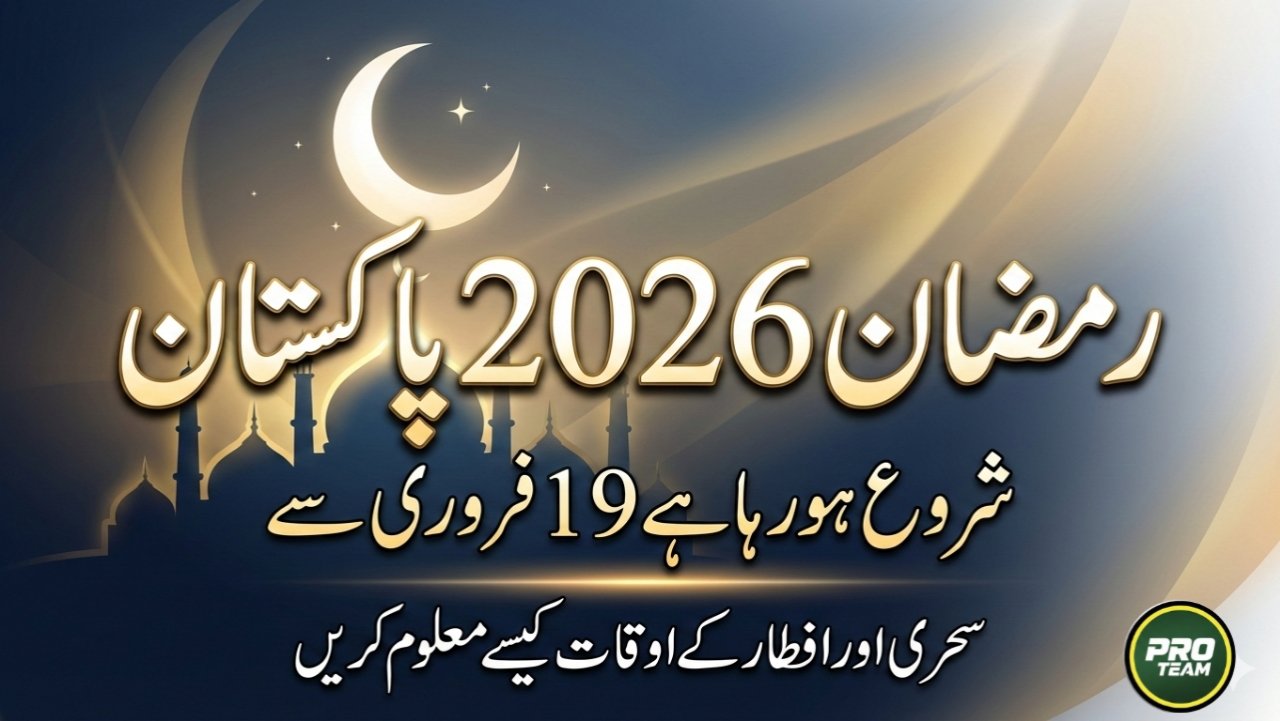
Ramadan is the most sacred month in the Islamic calendar, observed with fasting, prayers, and spiritual reflection. For 2026, the Pakistan Meteorological Department (Met Office) has predicted that the first fast of Ramadan will begin on Thursday, February 19. Millions of Muslims across Pakistan will prepare to observe the holy month with devotion and family gatherings.
| Feature | Details for Ramadan 2026 in Pakistan |
|---|---|
| Predicted First Day | Thursday, February 19, 2026 |
| Expected Eid-ul-Fitr | Friday, March 20, 2026 |
| Fasting Duration | Approximately 30 days |
| Major Cities | Karachi, Lahore, Islamabad, Peshawar, Quetta |
| Sehri Time Start | Varies by city (around 4:45 AM to 5:15 AM) |
| Iftar Time | Varies by city (around 6:00 PM to 6:40 PM) |
| Moon Sighting | Depends on local observation and Ru’yat-e-Hilal |
| Official Announcements | Local moon-sighting committees and religious authorities |

Importance of Moon Sighting
Ramadan begins with the sighting of the new moon (Hilal). The Met Office provides a prediction based on astronomical calculations, but the official announcement depends on local moon-sighting committees. Religious authorities confirm the start of fasting after observing the crescent moon on the 29th day of Sha’ban.
Sehri and Iftar Timings
Sehri and Iftar timings vary by city due to geographic location and sunset timings. Muslims are encouraged to follow local timetables to ensure accurate fasting hours.
- Karachi: Sehri ~ 4:50 AM, Iftar ~ 6:10 PM
- Lahore: Sehri ~ 5:05 AM, Iftar ~ 6:20 PM
- Islamabad: Sehri ~ 4:55 AM, Iftar ~ 6:25 PM
These timings are approximate and should be confirmed through official local masjid announcements.

Duration of Fasting
Ramadan lasts for 29 or 30 days, depending on the lunar calendar. Fasting starts at Sehri (pre-dawn meal) and ends at Iftar (sunset). During this period, Muslims abstain from food, drinks, and sinful actions while increasing prayers, Quran recitation, and charity.
Health Tips During Ramadan
Observing Ramadan requires discipline, and proper care is essential for maintaining health:
- Eat nutritious meals during Sehri and Iftar.
- Stay hydrated with water, juices, and soups.
- Avoid excessive fried foods to prevent lethargy.
- Sleep adequately and maintain moderate physical activity.
Cultural Significance of Ramadan
Ramadan is not just about fasting; it fosters spiritual growth, empathy, and community bonding. Muslims are encouraged to help the needy through Zakat and Sadaqah, strengthen family ties, and engage in nightly Taraweeh prayers.
Eid-ul-Fitr 2026 Prediction
The end of Ramadan is celebrated with Eid-ul-Fitr, predicted for Friday, March 20, 2026. This depends on the sighting of the Shawwal moon, marking the completion of the holy month. Muslims celebrate with prayers, feasting, and giving Zakat al-Fitr to the needy.
Conclusion
Ramadan 2026 in Pakistan is expected to start on February 19, subject to moon sighting confirmation. Muslims across the country will observe fasting, prayers, and acts of charity for around 30 days, culminating in Eid celebrations. Keeping updated with local Sehri and Iftar timings ensures proper observance, while the month serves as a time for spiritual reflection, self-discipline, and community welfare.
FAQs
Q1: Is the start date of Ramadan fixed?
No, it depends on the local sighting of the crescent moon. The Met Office prediction helps planning, but the official start is announced after moon sighting.
Q2: How long will fasting last in 2026?
Fasting will last approximately 29 or 30 days, depending on the lunar cycle.
Q3: Can I follow online Sehri and Iftar timings?
Yes, but it is recommended to follow official local masjid announcements for accurate fasting times.
Q4: When is Eid-ul-Fitr expected in 2026?
Eid-ul-Fitr is expected on Friday, March 20, 2026, subject to the sighting of the Shawwal moon.
Latest Updates
 Big Update: NADRA Smart ID Card 2026 – New Fees and Fast-Track Delivery
 News Alert: How to Check CM Punjab Honhar Laptop Scheme Phase 2 Merit List Online
 Latest News: Multan Sultans Sold for Record Rs 2.45 Billion Ahead of PSL 11
 Breaking News: Ramzan Negahban Card 2026 Online Registration Through PSER for Rs 10,000 Cash
 Latest Update: Chief Minister Livestock Card 2026 for Farmers Interest Free Loans and Animal Feed New Update
 Breaking News: DWP Announces New Housing Rules for UK Pensioners – Big Changes Begin 10th February 2026