Zakat Calculator 2026: How Much Gold and Cash Makes You Eligible New Method
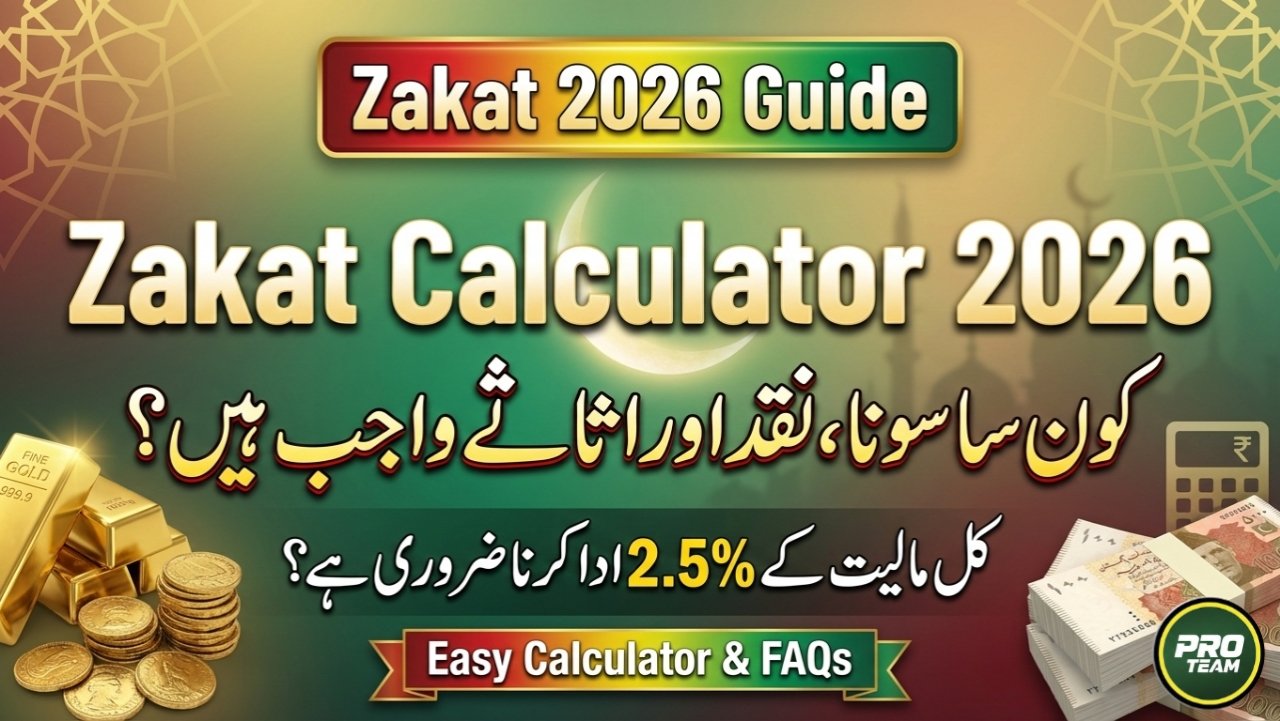
Zakat is one of the five pillars of Islam, and every financially capable Muslim must pay it annually. With 2026 approaching, it is important to understand how much gold, cash, and other assets make you eligible for Zakat. This guide provides a clear explanation of Nisab thresholds, calculation methods, and practical examples for Muslims in Pakistan.
| Asset Type | Nisab Threshold for Zakat 2026 | Zakat Rate |
|---|---|---|
| Gold | 87.48 grams (approx. 7.5 tolas) | 2.5% of total gold value |
| Silver | 612.36 grams (approx. 52.5 tolas) | 2.5% of total silver value |
| Cash (Savings/Bank Accounts) | Equivalent to Nisab of gold | 2.5% of total cash |
| Business Inventory | Equivalent to Nisab of gold | 2.5% of total inventory value |
| Agricultural Produce | Varies by type and irrigation | 5%–10% depending on water use |
| Livestock | 40 camels, 30 cows, 5 goats/sheep | 2.5%–20% depending on type |

What is Nisab and Why It Matters
Nisab is the minimum amount of wealth a Muslim must possess before Zakat becomes obligatory. It is calculated based on the value of gold or silver:
- Gold Nisab: 87.48 grams of gold
- Silver Nisab: 612.36 grams of silver
If your total wealth, including cash, gold, silver, and trade assets, equals or exceeds the Nisab for a lunar year, you are liable to pay Zakat.
How to Calculate Zakat on Gold and Silver
Gold and silver are the most common assets for Zakat calculation:
- Determine the current market value of your gold or silver in PKR.
- Multiply the total value by 2.5% (0.025).
- Example: If you own 100 grams of gold and the price of gold is PKR 15,000 per gram:
- Total value = 100 × 15,000 = PKR 1,500,000
- Zakat = 1,500,000 × 0.025 = PKR 37,500
- Silver works the same way. Its Nisab is higher in weight, so cash and silver owners often pay Zakat using the silver standard for fairness.
Zakat on Cash, Savings, and Bank Accounts
Cash savings and bank balances also fall under Zakat:
- Add all cash in hand, savings accounts, and fixed deposits.
- Compare the total with the Nisab value (based on gold).
- Pay 2.5% of the total cash if it exceeds the Nisab.
- Example: Cash savings = PKR 800,000, Nisab = PKR 600,000
- Zakat = 800,000 × 0.025 = PKR 20,000
Zakat on Business Assets
Business owners must calculate Zakat on:
- Stock and inventory at market value
- Outstanding receivables
- Cash in business accounts
Then pay 2.5% of the total eligible business assets if above Nisab.
Agricultural Produce and Livestock Zakat
Agricultural produce and livestock have specific Zakat rules:
- Crops: 5% if irrigated naturally (rainwater) and 10% if irrigated by paid water or machinery
- Livestock: Zakat depends on type and number of animals:
- 40 camels: 1 camel as Zakat
- 30 cows: 1 cow as Zakat
- 5 goats/sheep: 1 goat/sheep as Zakat
Conclusion
Zakat 2026 ensures that Muslims purify their wealth and help those in need. To calculate correctly:
- Include gold, silver, cash, business assets, and agricultural produce
- Compare your total wealth with the Nisab threshold
- Pay 2.5% of eligible wealth if above Nisab (agriculture and livestock may differ)
By using these calculations, you can fulfill your religious duty and contribute to the welfare of your community responsibly.
FAQs
Q1: Can I pay Zakat in installments?
Yes, Zakat can be paid in parts as long as the total equals the 2.5% of eligible wealth.
Q2: Should I pay Zakat on borrowed money I possess?
No, Zakat is only applicable on wealth that belongs to you and is fully in your possession.
Q3: Which is better for Nisab calculation, gold or silver?
Silver is usually preferred because it has a lower value and more people reach Nisab using silver, benefiting the poor.
Q4: Can I pay Zakat to family members?
You cannot pay Zakat to immediate family members who are dependent on you. It must go to eligible poor or needy people.
Latest Updates
 Big Update: NADRA Smart ID Card 2026 – New Fees and Fast-Track Delivery
 News Alert: How to Check CM Punjab Honhar Laptop Scheme Phase 2 Merit List Online
 Latest News: Multan Sultans Sold for Record Rs 2.45 Billion Ahead of PSL 11
 Breaking News: Ramzan Negahban Card 2026 Online Registration Through PSER for Rs 10,000 Cash
 Latest Update: Chief Minister Livestock Card 2026 for Farmers Interest Free Loans and Animal Feed New Update
 Breaking News: DWP Announces New Housing Rules for UK Pensioners – Big Changes Begin 10th February 2026